I can’t do homework/research all the time (though I spent 10 hours yesterday reading about medical marijuana and legalization, including one macroeconomics thesis that estimated annual tax revenue on legalized and regulated weed at $200 billion!), so I’ve been planning the GYE traverse in spare moments. I have a firm route worked out, and circumstances have recently given me cause to tinker with some gear.
First, the route. I’ll start at Moran Junction in NE Teton NP, hike over Two Ocean Pass and down into the Upper Yellowstone River valley. Camp somewhere along Atlantic Creek the first night, so that I can cross the Yellowstone River and Thorofare Creek in the morning (before snowmelt raises them). Read the Arctic 1000 link in yesterdays post for the best beta I’ve found about crossing the Yellowstone around that time of year. Gnarly. June traditionally has twice the flow of May (measured at the outlet of Y-stone Lake), and I’ll be crossing above numerous big tributaries, and the river is pretty flat in that area, so I may well get across without having to swim. For the second night, I intend to camp at site 6D2, right by Mountain Creek. It and the other steeper creeks along the East shore of Y-stone Lake may be the tougher crossings, with high velocity currents and cobble bottoms possible. For the third night, I’ll camp at 5E8 or 9. These first three days are fairly short and easy, to give me plenty of time for snow, river crossings, and the fact that my training thus far has been walking rather than riding to school and back.
The fourth day will be longer of necessity. Pelican Valley is closed in May and June because it’s such a wildlife haven, so I’ll have 5 miles of trail, 8 miles of road walking, 11 miles along the Howard Eaton opposite the Y-stone River from the Hayden Valley road, and than another mile or two of pavement into Canyon. Absent convenient BC sites, I intend to camp in the big commercial campground, have a lux breakfast at the store, and get a final permit for the next night down near Hellroaring Creek. Day five will be a ski up and over Mt. Washburn, the road there still being unplowed in May. Day six will bring Project Yellowstone full circle, down the Black Canyon trail that M and I hiked in June last year when this all started. I ought to note that PY failed in April, when I did not get out to the park. Regrettable, but I chose to do the canoe trip instead of go to the park, and I’m ok with that. It’s still been a great thing, and I hope to cap it off emphatically.
There are three x-factors in my plans. The first is the water crossings, which I’ll be as prepared for as possible, absent a packraft. With drybags in the pack for flotation I think I’ll be fine. The second is permits for the initial section. I’m quite sure the rangers will think I’m mad when I ask for them. We’ll see how that goes. I did start a thread on the subject over at BPL and got some interesting feedback.
The last variable is the snow. Models still show lots, especially south of Y-stone Lake. Initially I though I’d bring snowshoes, but a chance visit to the campus gear sale on Thursday yeilded a $5 pair of 150cm, 60mm waisted Head Cyber 18x skis (with beat up but functional Voile Mountaineers, score!!), that are being put to use as an experiment.
The thesis is that short, tele skis with fishscales, kicker skins, and a universal approach binding will be faster and more efficient than snowshoes under spring conditions. Much better on the flats and ups seems axiomatic, and even if I have to flail and kick turn on the downs that will be an improvement. Plus, snowshoes lack style. Inspired by the ideas contained in this thread and by these bindings, off I go:

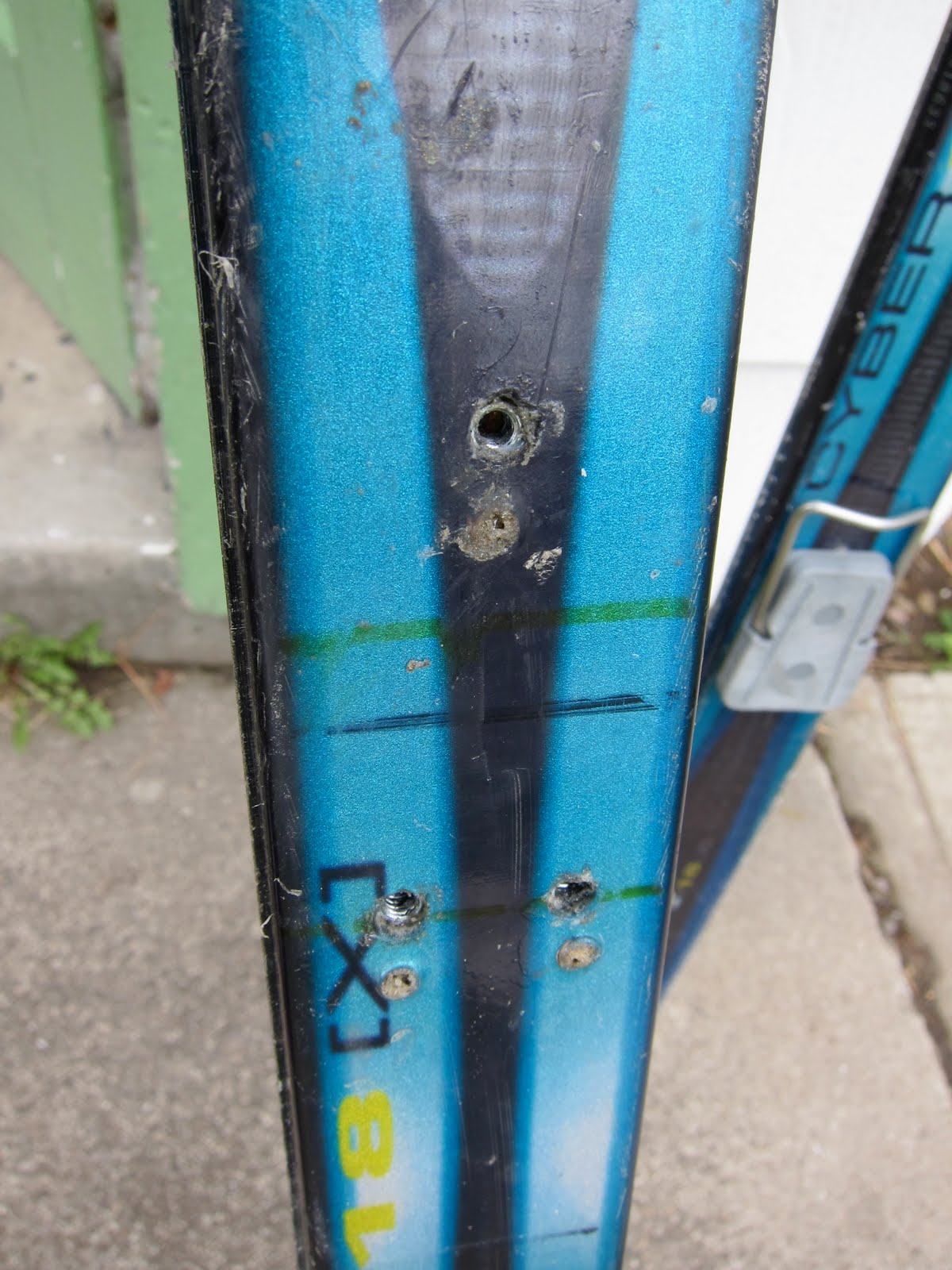
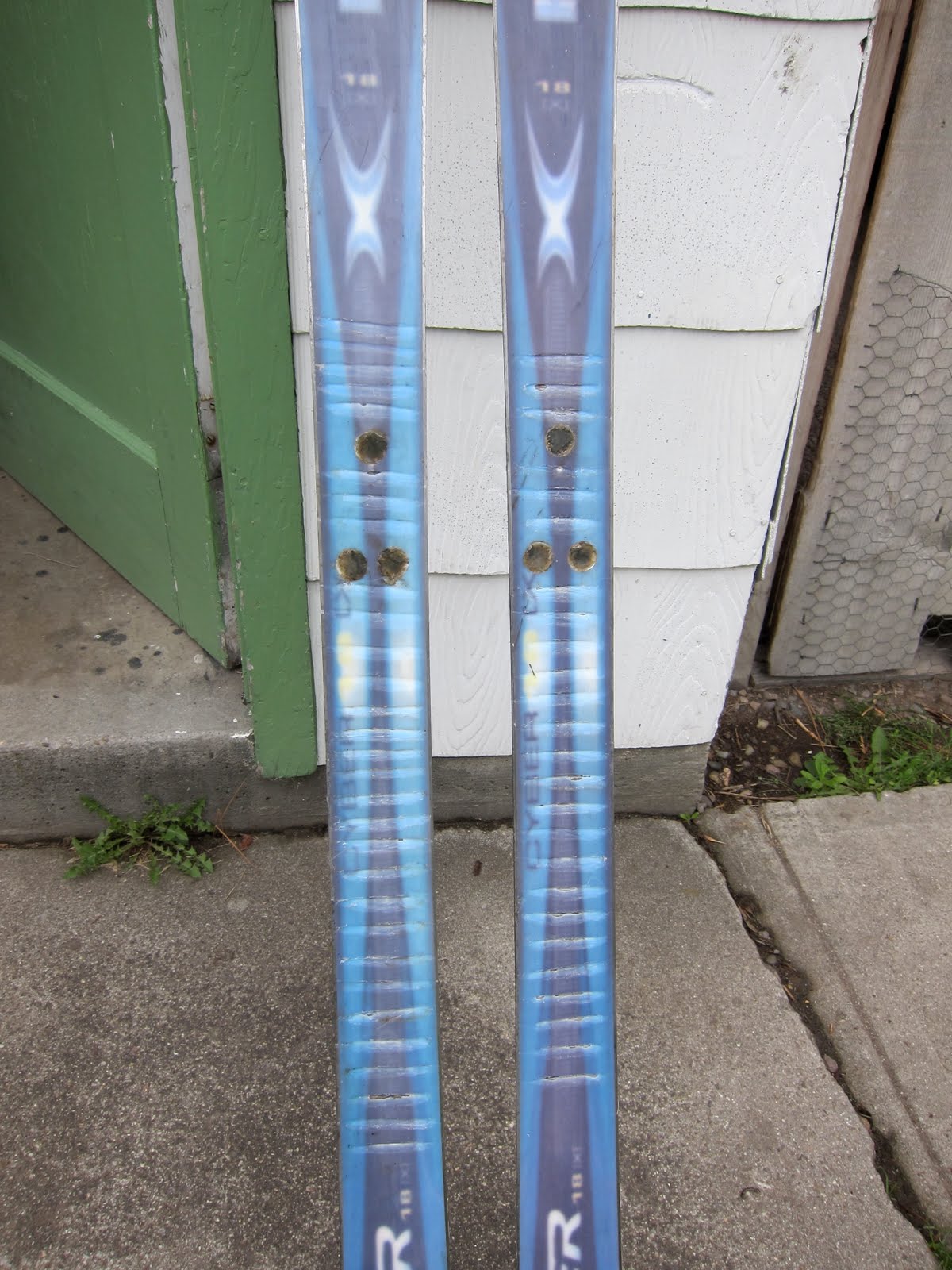
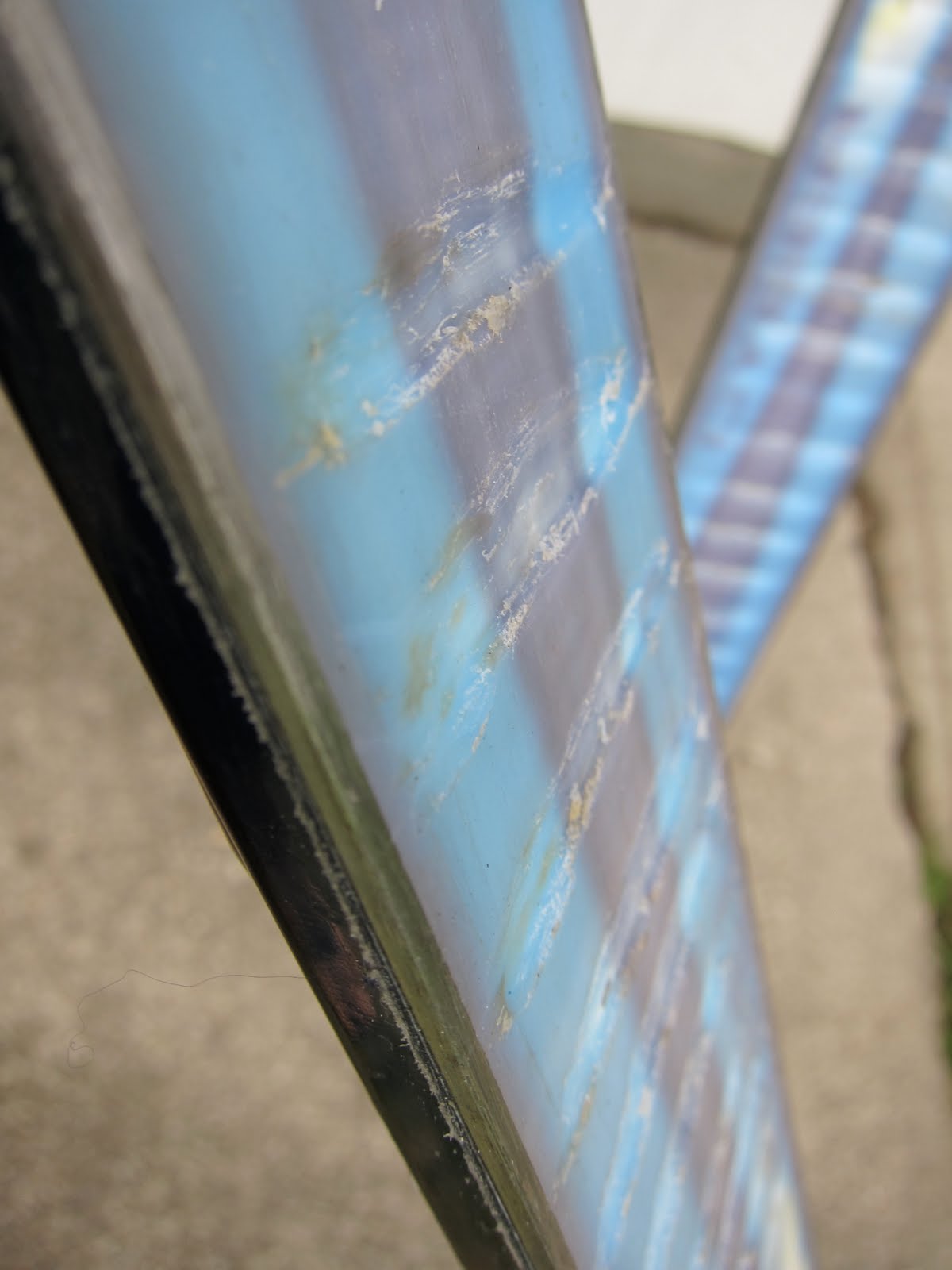
I want to be able to use these for spring and summer ski mountaineering when firm snow and long approaches are the rule, so I put in T-nuts with pin line on balance point to make binding swaps fast and efficient. I might get full skins for them, so I put in climbing wires. Tip holes are handy for rigging shelters, and fishscales are mandatory for efficient movement on the flats in spring conditions when waxing is a huge pain. I freehanded these in with a dremel sanding wheel, and didn’t get too many core shots. Having a beat up pair of dirt cheap skis is obviously nice for this.
As shown the skis weigh 2 lbs 7 oz. Bindings (either 3 pins or the faux-berwins I’ll be making soon) should bump that up to right around 3 lbs a skis. My monster Tubbs snowshoes are 2lbs 3oz each, so not a bad trade. We’ll see how the concept works out.

 Bedrock & Paradox
Leave a comment