

I wasn’t exactly looking for this boat, but I was keen to have a solo/smaller version of the Revelation; a canoe that would be as versatile downriver but not be quite so unwieldy, both paddled lightly loaded and especially when moving it around out of the water. I got something close in the form of a Mad River Freedom Solo, on paper a solo Revelation in that it has symmetrical rocker, plenty of flare, and a shallow v hull. To skip to the end, I like the Freedom Solo, and it has proven versatile, most plainly during a September trip down the Smith all the way to the Missouri, and then down the Missouri to Great Falls. The Smith was running around 100 cfs when I started, and doubled the first night after 24 hours of steady rain. 100 is quite enough for a canoe, but makes for plenty of rock dodging. From Chaos Bridge to Truly Bridge the Smith keeps a bit of gradient and makes for interesting paddling, but the final 10 miles, and then all of the 30 miles of the Mo down to Great Falls, are very flat. I was missing the DY Special, particularly while fighting headI’m still experimenting on the details, but while the Freedom Solo keeps the Revelation’s maneuverability and stability, it falls quite a bit behind on tracking. It might be the dimensions relative to the amount of rocker, though I suspect the scope of the rocker, which on the Freedom Solo starts a bit earlier, is mostly to blame. I cut new end thwarts to tuck the hull a bit more after that Smith trip, but haven’t had enough time in that boat since to fully evaluate.
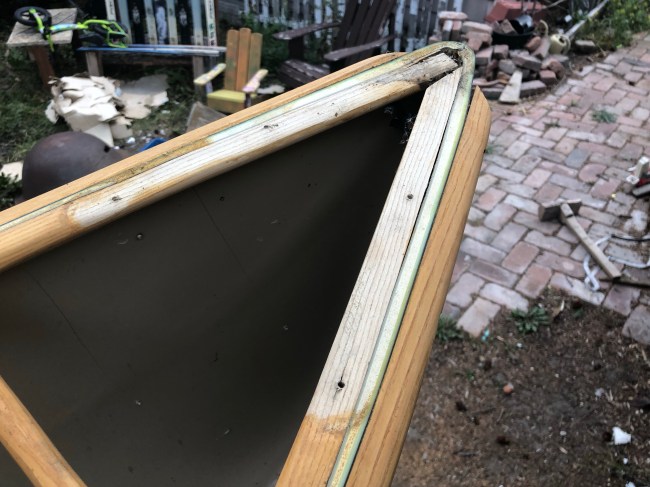
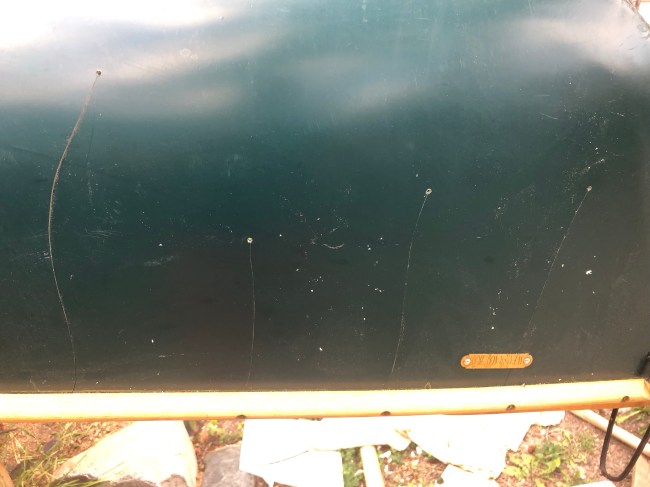
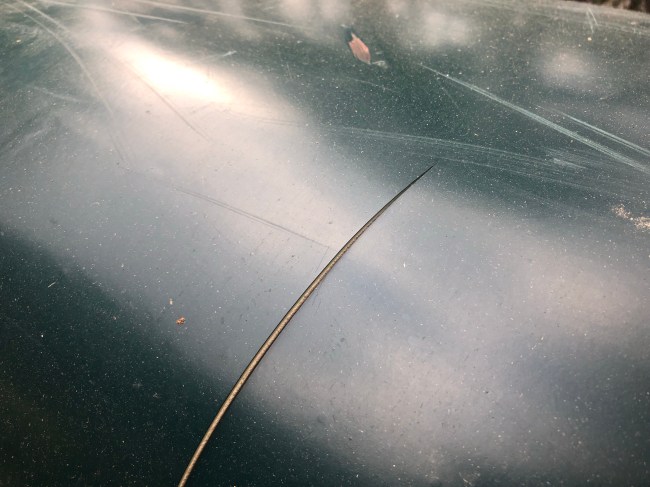
In any case, the story of this canoe is a sad one; a local friend of a friend bought it, used it once and stored it for the winter (in a covered but unheated shed ) with the screws loosened but not totally backed out, and went in this spring to find a bunch of cold cracks, all on one side. As can be seen above, the wood was suffering a bit under the deck plates (likely due to dodgy factory finish), but was otherwise in very good shape, with the overall situations here seemingly highlighting how random cold cracks in wood trimmed royalex boats can be. I paid 100 dollars for this boat, with the promise I’d have it back on the water and use it well.
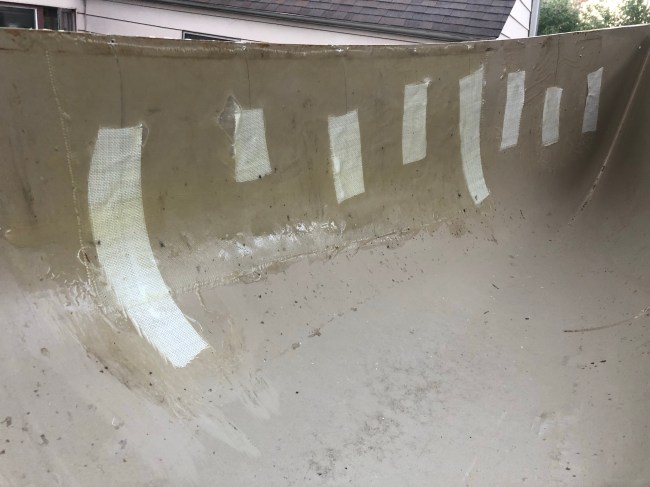
With past experience and only one side to contend with my repair process was more streamlined than with the Revelation. I drilled end holes on the cracks, cleaned things up, taped the outsides, and laminated a strip of innegra over most of each of the major cracks, then pulled the gunnels and laminated a patch of 6 oz glass over each group of cracks, running that patch up to the edge of the hull. The virtue with leaving the gunnels on for the first go is that you get the flop stabilized with the gunnels still holding the cracks together. With the glass layer mostly cured, I could flip the hull, pull the tape, and do a fill layer of epoxy into the cracks. This part is finicky, and mildly thickened epoxy would be useful. Next time. Apart from this hull work, which went quickly and easily, I sanded and refinished the gunnels, cut a few inches off the seat hangers, and applied a few more layers of varnish to the seat and thwarts, as well as putting the decks permanently aside, given that functionally such things are nothing but trouble. The boat was ready for a trip on the Blackfoot not much more than a week after I got going on the repairs.


On the one hand it falls short with respect to practicality, being not that much faster than a packraft. It does hold a lot more, and more easily, and is just generally really full to paddle, especially on small rivers, and while not good into a wind is not hopeless, either. And most importantly, I am well past the point of practicality where the boat quiver is concerned. As has been the case with the Revelation, the cold crack repairs have been (functionally) invisible.
 Bedrock & Paradox
Leave a comment