I tied my first four flies today, an endeavor prompted by both curiosity and loosing three different caddis to tall shrubbery yesterday. My education proceeded as I prefer it: read a book or two, watch a few internet videos, then get amongst it.
My guidelines were/are as follows:
-Light colors are preferred, because they’re easy to see. I have a black royal wulff with red wings that is gorgeous but impossible to see against dark western Montana stream cobbles.
-The classic tenkara reverse hackle seems neat, and isn’t found in local fly shops, so I should make some like that.
-Fish don’t see so well, so exact bug immitation may not really matter.
-Dry fly season may soon be over.
The first go was a reverse hackle, and a bit scrappy looking.
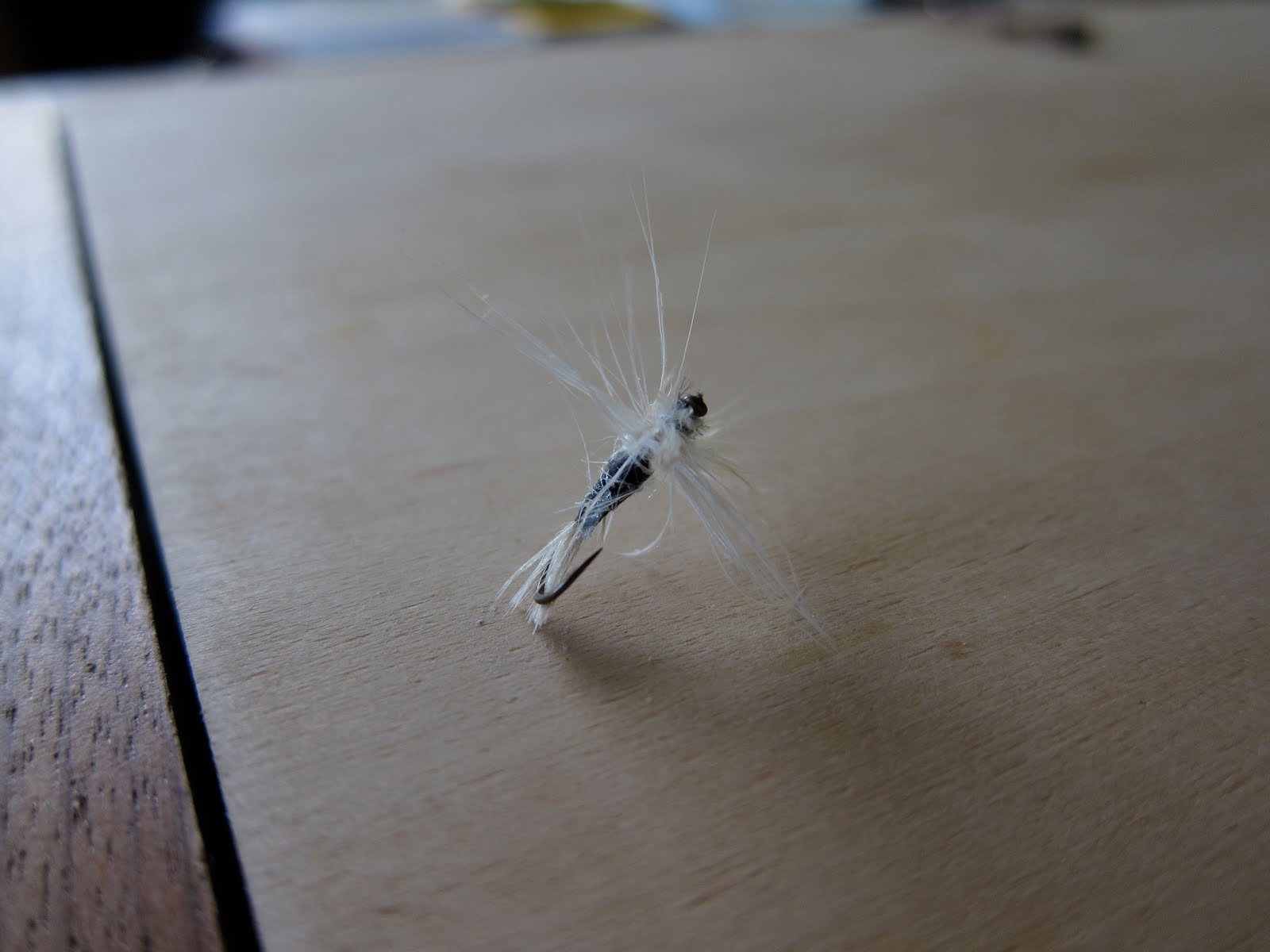
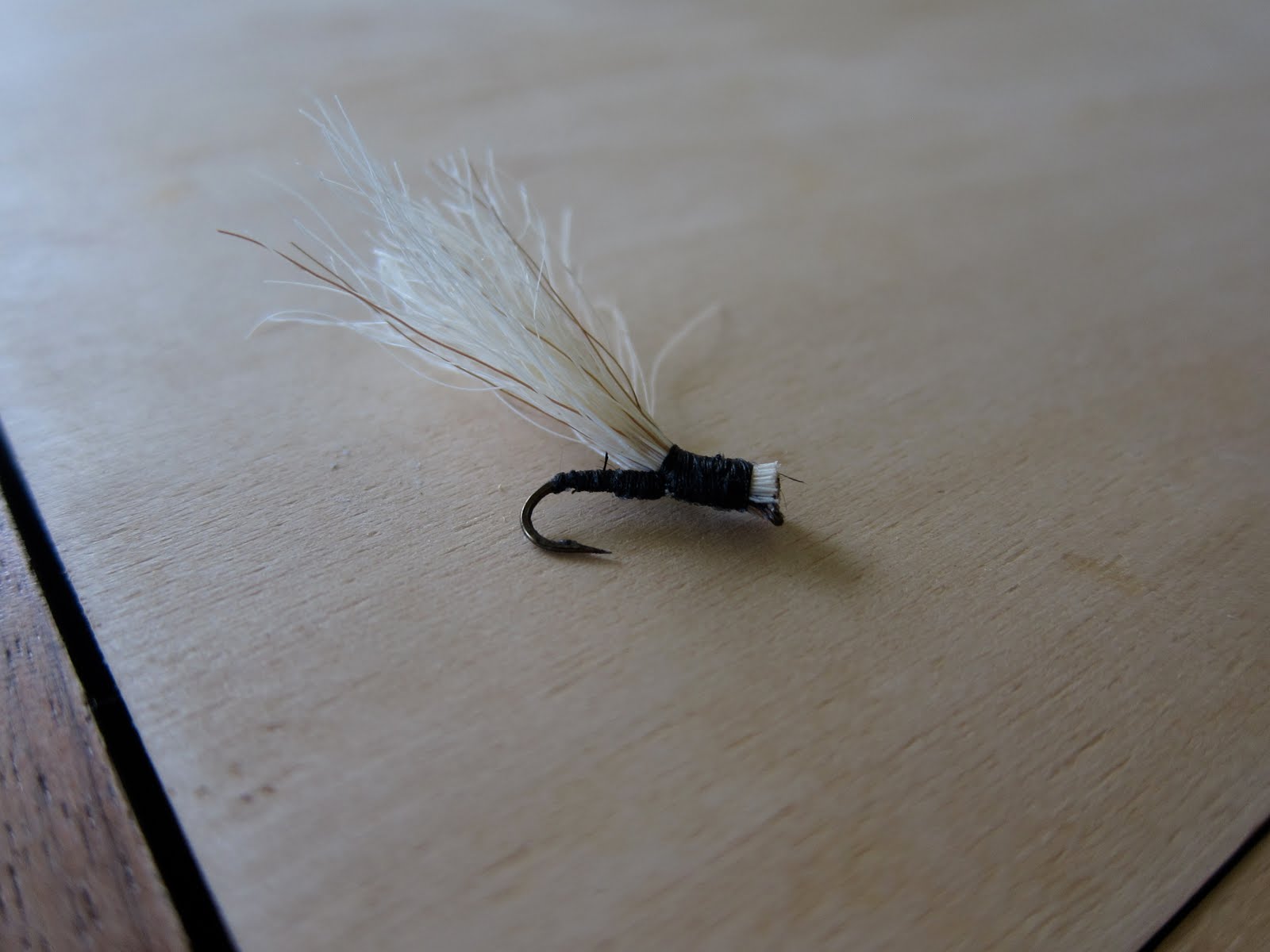
The second a deer tail hair streamer, to augment the black wooly buggers I already had in the fly box.
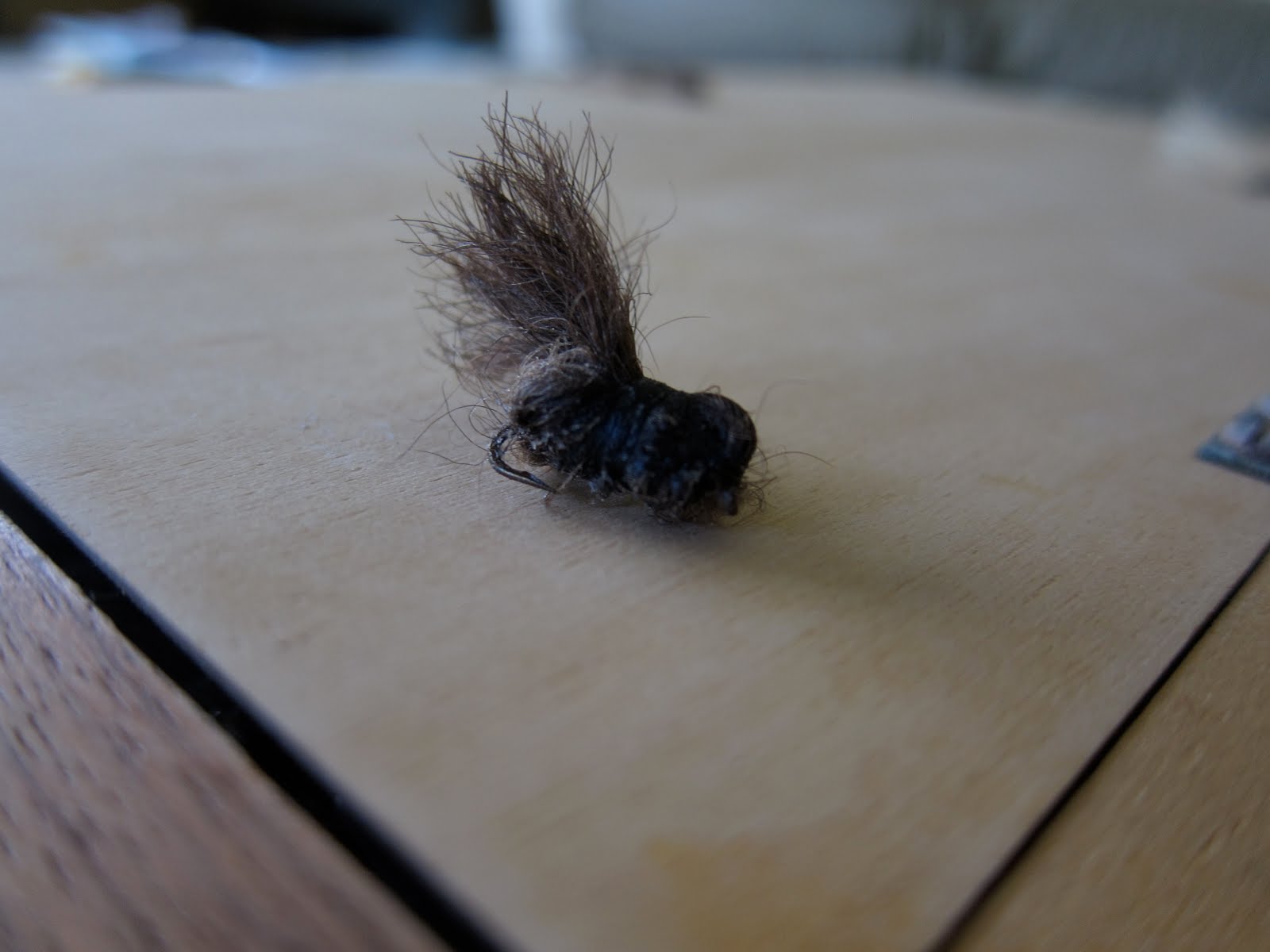
The third was a bison fur scud/killer bug.
The fourth a fluffy reverse hackle, with a body and tail of bison fur and white feather hackles.
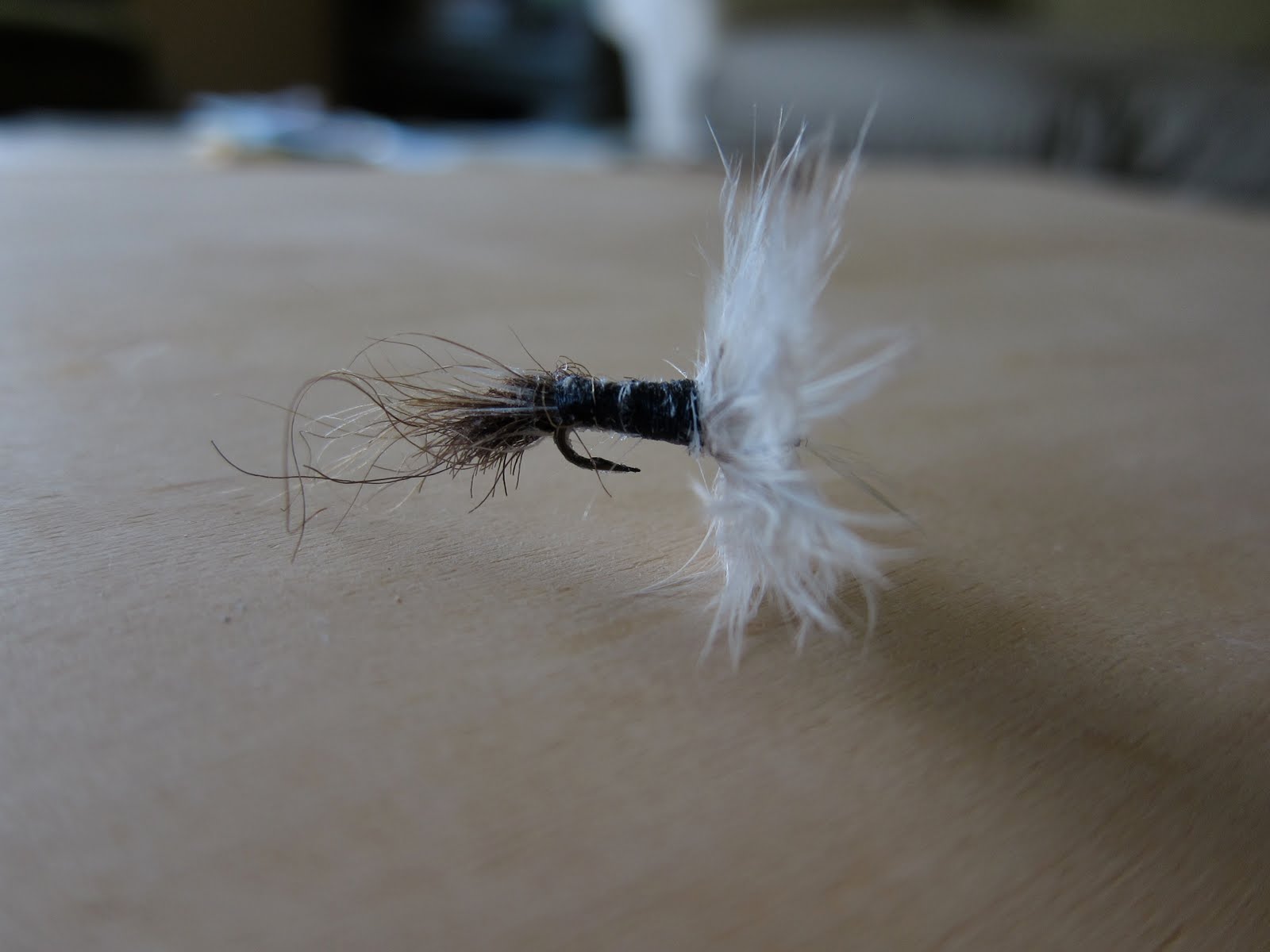
I think they got better as I went. The last one is already tied on to one of the two level lines I keep wound around a piece of foam board for fast deployment.
All hooks are #14, a bit smaller than I prefer but probably ideal for the smaller waters I like to fish. My late father had a tying suitcase with supplies, most likely a gift from my maternal grandfather, a passionate all-around outdoorsman. Only #14 hooks, as well as a vice and generous stock of materials. I didn’t go nearly as crazy with annoyance at my lack of fine motor skills as I thought I would, so maybe this will become a regular thing.
And as a most pleasent surprise, I found this fly stashed inside one of the rolls of thread:
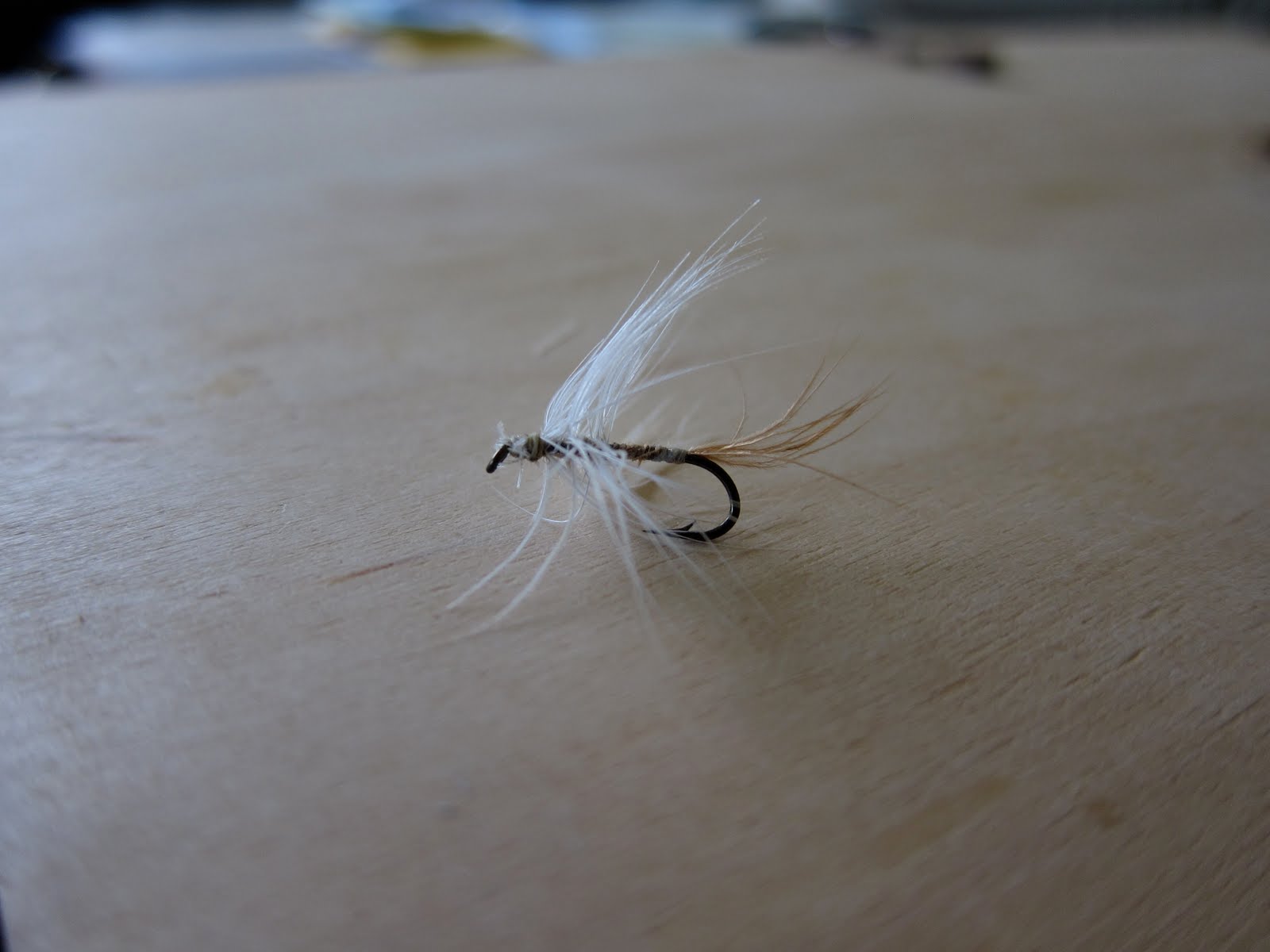
I can only presume my dad tied it himself. I won’t be fishing with it.

 Bedrock & Paradox
Leave a reply to Enel Cancel reply