In continuation from yesterday..
I’ve always been interested in outdoor gear. I studied gear catalogues from a very early age, years before the internet made fetishization so convenient. We’re talking about an eight year old in Ohio, who took enthusiastic but not nearly frequent enough backpacking and camping trips with his family. I continued to study catalogues and websites as I grew older. It’s what I do, my interest in a subject is either forceful or wholly absent, and when I am interested in something I want to know it well. This applies to most everything. There was still an element of fetishization (ie I want to be like them!) in all this, even post-college when I escaped west for good. It’s only been in the last few years that I’ve realized, to be immodest (with which I’m not at all comfortable), that I am those people in the catalogues. In the areas of outdoor endeavor I care about these days I am on the cutting edge, hardcore, epic, an expert, etc. This perspective has let me transcend, mostly but not entirely, the fetishization of gear upon which the outdoor industry is built and be more of a critical consumer.
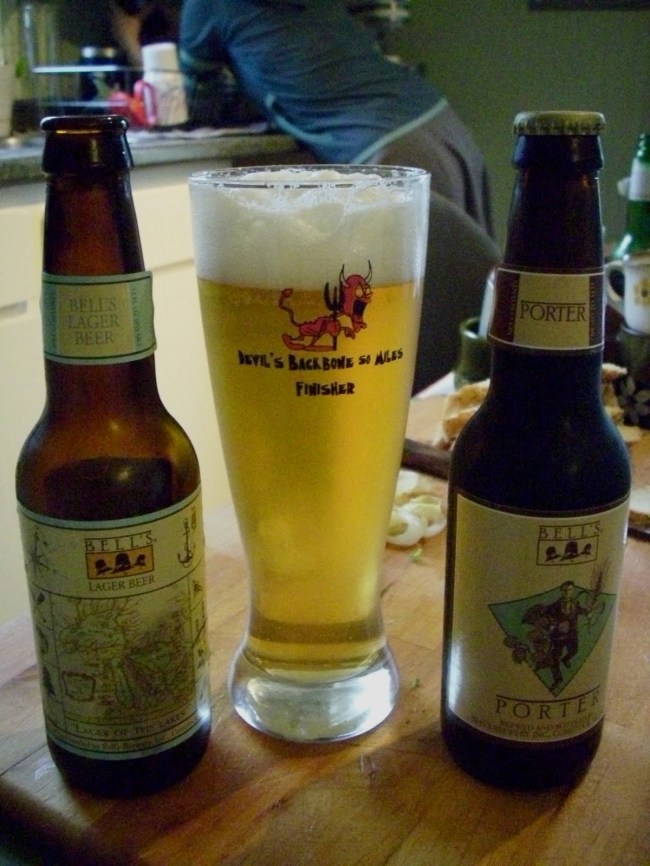 No denying it; we humans like stuff, and use it to mark the significant passing of our lives.
A good gear review should be easy to spot, and easy to quantify. As has been said recently, obvious evidence of use in the review plus the established track record on the reviewer create credibility and authority. In the realm of personal bloggers, trip reports are the foundation of this. If you can’t be bothered to write about the foundational practice of your passion, I don’t want to read what you have to say about gear. If you don’t get out much and try to hide it, then you likely have little of worth to say in the first place. In summary, if you take Gear Junkie, Feed the Habit, Section Hiker and the like seriously as a source for in-depth gear beta you might want to re-evaluate your standards.
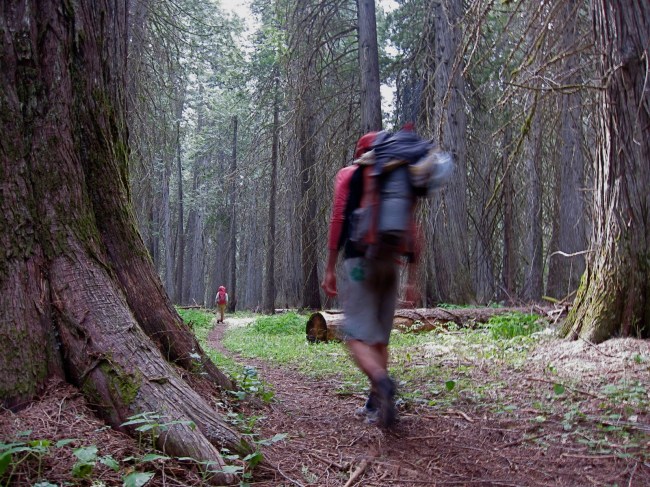 Forrest and Luc, Moose Creek, ID.
If we pursue this paradigm of online community vetting our gear reviewers, I would hope that the matter of getting gear for free should become a non-issue. I’m much more concerned with writers/bloggers who have a financial stake in the practice. Gear reviews drive blog traffic, for better and worse, and if your business is tied up in keeping and increasing traffic along with keeping and increasing gear review referrals from companies, I think the concern that this will erode integrity and dilute the mission is real. There’s no one solution to this, and plenty of folks manage the balance just fine.
There’s also the more complex matter of how much use is appropriate for a review to be based upon. I have high standards here, mainly because it takes me so long to get used to a items quirks, and because I regard durability as a big deal. Last year I took Roger Caffin to task during a BPL pack review, as he freely admitted that he had not taken many of the packs on actual trips, just test loops and training hikes. I still think this is scandalously inadequate, relying as it does on what is essentially an armchair assessment for all but the basic carry traits of the packs. On the other hand, I have a much softer opinion now, after having gotten involved in professional gear reviewing through BPL.
This spring I signed on to review (among other things) alternative rainwear and sub 8-oz rain jackets. The later is still in the works, with my first wildly optimistic deadline pushed back indefinitely (until it’s done!, we did get new coats from the Summer OR). The former is in editorial processing stasis. Both made me realize the value of having one reviewer for big projects, the unity of perspective allows for a comparative view of the whole genre which is the most valuable piece of a state of the market review. The downside is obvious, one person can only put so much use into so many pieces of gear in a given amount of time, and that is subject to the weather. Seriously, no significant rain storms in all of August and September here put testing back a lot! The relevance of a review does not last forever, especially in a mutable world like that of outdoor apparel.
So in the end you have to compromise. In both projects I’m not getting as much data and experience as I would like. I compromised more with the poncho-tarps and so forth, as there are fewer variables and those which exist are less particular. Yes I slept under all of them and hiked in the rain with all of them, but in some cases only once. I’m still uneasy with that.
Rain jackets, and especially the durability of lightweight WPB coatings, is a more nuanced subjects. I did what I could, but in the end farming out the gear by selling it to friends at deep discounts or giving it away was a good opportunity to clear the house of a many rain coats and get more data points for the eventual article. And it’s already paid off, and might prove to be the ideal compromise.
All of which is to say that this is a worthwhile topic for debate, and not just cause we’re gear nerds. This has to do with how we win and share knowledge in general, and that in turn has to do with why and how we live in the first place.


 Bedrock & Paradox
Leave a comment