I have a problem with the way outdoor photography is used to sell stuff. It is an inevitably aspirational medium, and insofar as this is the case all too often falls short.
I’ll use a few photos from the latest Patagonia catalogue to illustrate this, both because Patagonia has consistently had the most actively artistic approach to photography of any gear company, and because it’s the only such catalogue we regularly receive. [It used to come twice a year, now it’s about monthly. That is another matter.]
 Photos are intentionally bad, if you want one order a copy yourself.
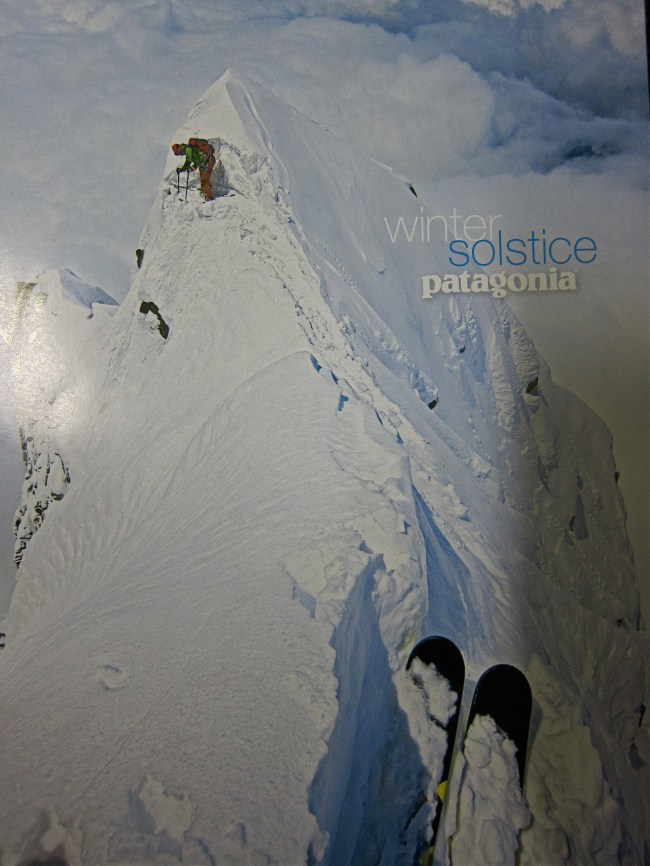
This is the cover photo, by Christian Pondella. Quick googling reveals that this is exactly what it looks like: a gnarly ski descent with at least one rap to get in. As best as I can tell without having been there, the photo represents reality well.
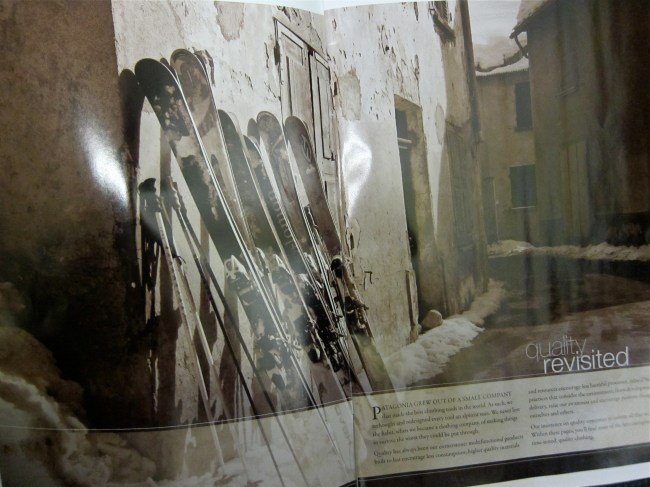
This is the inside cover. Lifestyle outdoor photography as rather disingenuous. The shot is evocative, but isn’t telling us anything in particular. Worse still, all the skis pictured have pure alpine bindings. Yes Patagonia sells to folks who only ride lifts, and yes you can hike to some gnarly stuff in Europe (photo is from France), but neither of these are what Patagonia should be selling, in the aspirational realm.
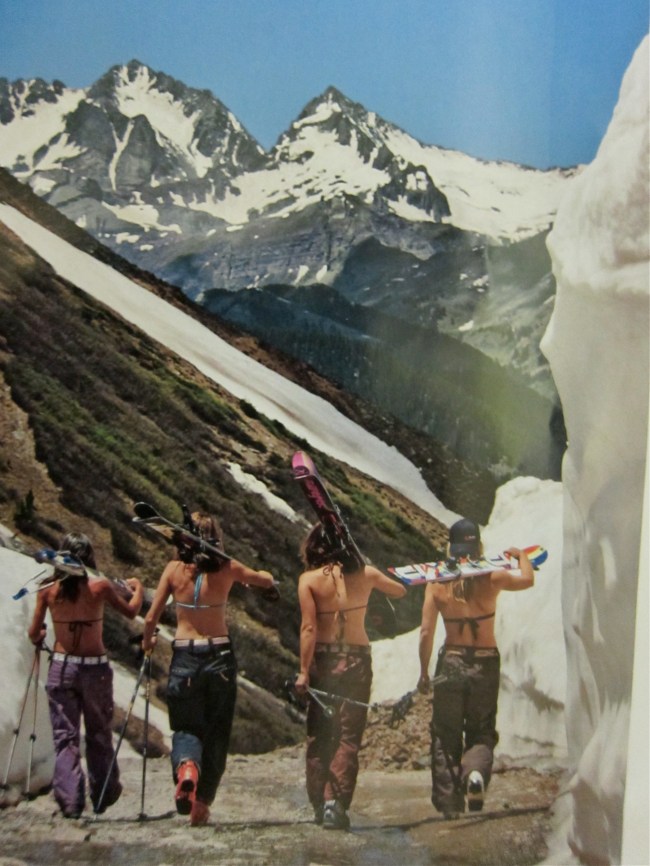
The final shot in this winters catalogue. Sex sells, and the only thing better than a woman with shoulders in a bikini top is one with a steezy belt hauling dynafitted fat skis. I’m prepared to believe this phallocentric fantasy actually exists in Colorado (photo was taken near Ophiristan), but if these ladies are out touring on a hot day, where are their packs? Maybe they’re doing truck shuttle runs on a June snowfield, but more likely this photo was directed and staged. Sad.
It’s not realistic for all outdoor photography to be spontaneous. The weather which is good for sending a hard problem in Horse Pens is not necessarily the best for photos, you’ll be more likely to get the shot if your friend rides that rock drop again, and it’s helpful to ask folks to ski right past you on a certain side if at all possible. What I want photographers and photo editors to respect is the zeitgeist in which the photos were taken and in which the activity took place. It’s pretty easy for someone like me to thumb through a magazine, identify where the majority of the photos were taken (please get away from the road in SoUt and make it more of a challenge!), and quantify with reasonable accuracy the amount of posing and general inauthenticity involved. Aside from giving me something else to whing about, no harm and no foul.
The problem here is with the uninitiated masses, out of which we all must (and hopefully will) spring. Outdoor media is driven by gear sales, but it’s larger end should be to inspire greatness in those starting out. I recall hiking up to Long Wall in the Red almost 15 years ago, and seeing some of the huge, arching big lines for the first time. I wanted to climb harder not to climb harder, but to be able to make it up those proud and striking lines. Now I’m essentially retired, and while I never did El Cap I climbed harder than I ever thought I would when I started, and it’s pretty cool to see modestly difficult routes and problems in magazines and be able to recall the beta from personal experience. The view down from the crux of Anaconda in the Garden of the Gods is best when you’re clipping the decades old pins and greasing out of the flared locks yourself, on the sharp end.
When magazines cheapen reality by needlessly enhancing it, they do everyone a disservice, but no one more than the teenaged gumby just starting out. People in that position need to know that the level of radness portrayed in media in not only attainable by normal humans, it can be exceeded with little more than half a decades dedicated work at your activity of choice. When a skiing shot is tilted, or a sidecountry line tamed by practice and proximity to rescue passed off as a backcountry line, the experience is cheapened. When a shot of a famous climber holding a pose on a non-route runs in a major magazine, the status of climbing as one of the ultimately democratic sports is degraded. (Want to be the best climber on earth? Get good, travel, and climb the hardest routes. On your own terms. Beautiful, simple.) When a backpacking photo contest is won by a shot taken 1/4 mile from a paved road, the fact that the best landscape photography is taken days from the car is called into question.
You, the newbie, can do great things in the backcountry which will shock, amaze and enlighten you in ways never before conceived. It should be the moral duty of those already privy to this fact to uphold it. Run photos which hold true to both the spirit and the fact of the endeavor. It’s not a coincidence that the first photo above was taken by a very accomplished skier. Photo editors should refrain from running photos taken by people who are pro photographers only, turn back photos which look good but at base lie, and the heads of outdoor media should not hire editors who don’t intimately know the subject in which they’re working. If they don’t know a lie when is comes across their monitor they should go work for Outside.
This is one way in which digital media is killing off the print world. With broad access to platforms and technology, the authenticity bar is being raised rapidly, and hopefully standards with it (and the frequency and vociferation of public excoriation). The only trick left is how to monitize new outdoor media, such that integrity and talent find a way to get together as often as possible.


 Bedrock & Paradox
Leave a reply to Jill Homer (@AlaskaJill) Cancel reply